
How to exchange your Foreign Driving License in Germany without reciprocity agreement. #
If you’re planning to drive in Germany, you’ll need to convert your foreign driving license or obtain a new German one. The process might feel complicated at first, but this step-by-step guide will walk you through everything you need to know from signing up with a driving school to picking up your new license.
1. Sign up with a Driving School (Fahrschule) #
To get a German driving license, you must register with a certified Fahrschule, it’s mandatory for both theory and practical tests. In Germany, you can’t learn to drive privately or with family members.
Many driving schools in larger cities offer English-language instruction. Your Fahrschule will also guide you through the specific local steps, which may vary slightly by city.
Tip: Use an online search platform with a language filter to find English-speaking driving schools in your area.
2. Complete the first Aid course and Eye Test #
You must complete a first aid course (Erste-Hilfe-Kurs) and an eye test (Sehtest) before applying for your license.
The first aid course takes 9 sessions of 45 minutes and is often offered on weekends. Many providers also allow you to take the eye test and photo on the same day. If not, you can do the eye test at any local optician.
Your driving school can usually recommend nearby providers. If not, here are some English-friendly options in major cities:
3. Book an Appointment at the Driving License Office #
Apply for your German driving license in person at your local Führerscheinstelle or Straßenverkehrsamt (driving license office) in the city where you are registered.
You can book an appointment online or by phone. If you’re exchanging a non-EU or non-EEA license, select the option:
“Umschreiben eines ausländischen Führerscheins (Non-EU/Drittstaaten)”
Here are links to the relevant offices for major German cities (for expats):
4. Prepare your documents #
Before your appointment, gather all required documents for exchanging your foreign driving license (without reciprocity):
- Biometric photo (35 x 45 mm)
- Valid foreign driving license
- Certified German translation of your license
- Passport or German ID card (Personalausweis)
- Proof of license duration (if not shown on your license)
- First aid course certificate
- Eye test certificate (issued within the last two years)
5. Attend your appointment #
This is the first of two visits to the Führerscheinstelle (driving license office). During this appointment, the office will review your documents and decide whether to approve your application. If approved, they’ll notify the TÜV that you’re eligible to continue with the licensing process.
The TÜV (Technischer Überwachungsverein) is an official inspection and certification body in Germany. They oversee vehicle inspections as well as all theoretical and practical driving exams.
6. Study for and pass the theory Test #
Before continuing, you must pass the theory exam. Although the test is available in English, don’t underestimate it German traffic laws are detailed and specific. About 36% of applicants fail on their first try, so make sure to study all official questions in advance.
You can prepare using online platforms or mobile apps that offer the German driving theory test in English.
7. Take Driving Lessons #
Most driving schools will require at least a few practical lessons, even if you already have driving experience. This helps them:
- Assess your skills and ensure you understand German traffic rules.
- Reduce the risk of failing the practical exam.
Each lesson lasts 45 minutes, and double sessions are common for better progress.
Once your instructor is confident in your ability, your Fahrschule will schedule your practical test with the local TÜV.
8. Take the practical Driving Test #
Before starting your test, the examiner will ask 3–5 basic questions, such as:
- How do you know when a tire is worn out?
- How do you check if the brake lights work?
- Which button activates the hazard lights?
Afterward, your practical exam begins. Your instructor will sit in the passenger seat, while the examiner sits in the back and gives driving instructions. The test lasts about 45 minutes, and you’ll be told immediately whether you’ve passed.
If you pass, you’ll receive a temporary slip allowing you to drive until your official license is ready.
If you fail, the test may be stopped early if a serious mistake occurs. Your instructor will usually recommend a few more lessons before you retake (and repay for) the exam. Around 31% of applicants fail the practical driving test in Germany, so good preparation is key.
9. Pick up your German License & surrender your Foreign one #
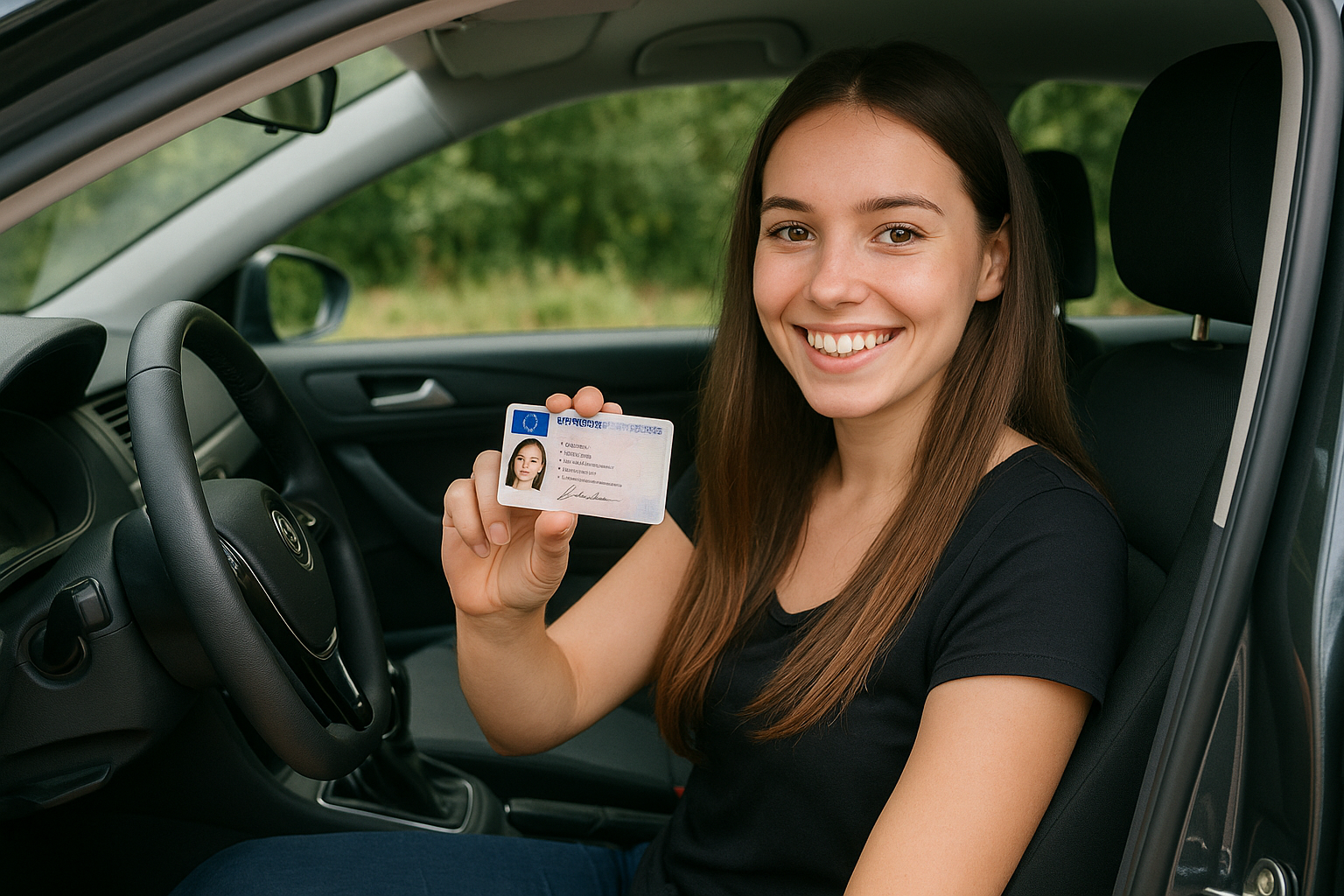
Congratulations, you’ve made it. After the TÜV confirms your successful exams, your local Führerscheinstelle will notify you when your German driving license is ready for pickup usually within a few weeks.
Before receiving it, you may be required to hand in your foreign license. This depends on your country of origin and local regulations some applicants must surrender it, while others can keep theirs.
In some cases, surrendering your old license means your driving experience isn’t transferred, and your new German license will mark you as a first-time driver. This can affect car rentals and insurance. For example, some car rental companies may not rent to new drivers during their first year.
Conclusion #
Exchanging your foreign driving license in Germany without a reciprocity agreement can seem overwhelming at first, but with the right preparation, it’s entirely manageable. From signing up with a certified Fahrschule to passing your theory and practical exams, each step brings you closer to driving legally and confidently in Germany.
Stay organized, study thoroughly, and take advantage of English-language resources and driving schools. Once you’ve completed the process, you’ll not only have your German driving license in hand but also a solid understanding of the country’s traffic laws — setting you up for safe and stress-free driving across Germany.
Check out our guide How to get driving license in Germany
Leave your comment