
How to use Public Transportation in Germany #
Public transportation in Germany is excellent. It covers big cities, connects different cities, and reaches smaller towns. It is known for being reliable, comfortable, and fast. Although many Germans love cars, most people in big cities especially expats prefer using public transport daily. Large cities have more transport options, but even small towns have at least a bus system. Information about schedules, ticket prices, and discounts is clearly available on official websites.
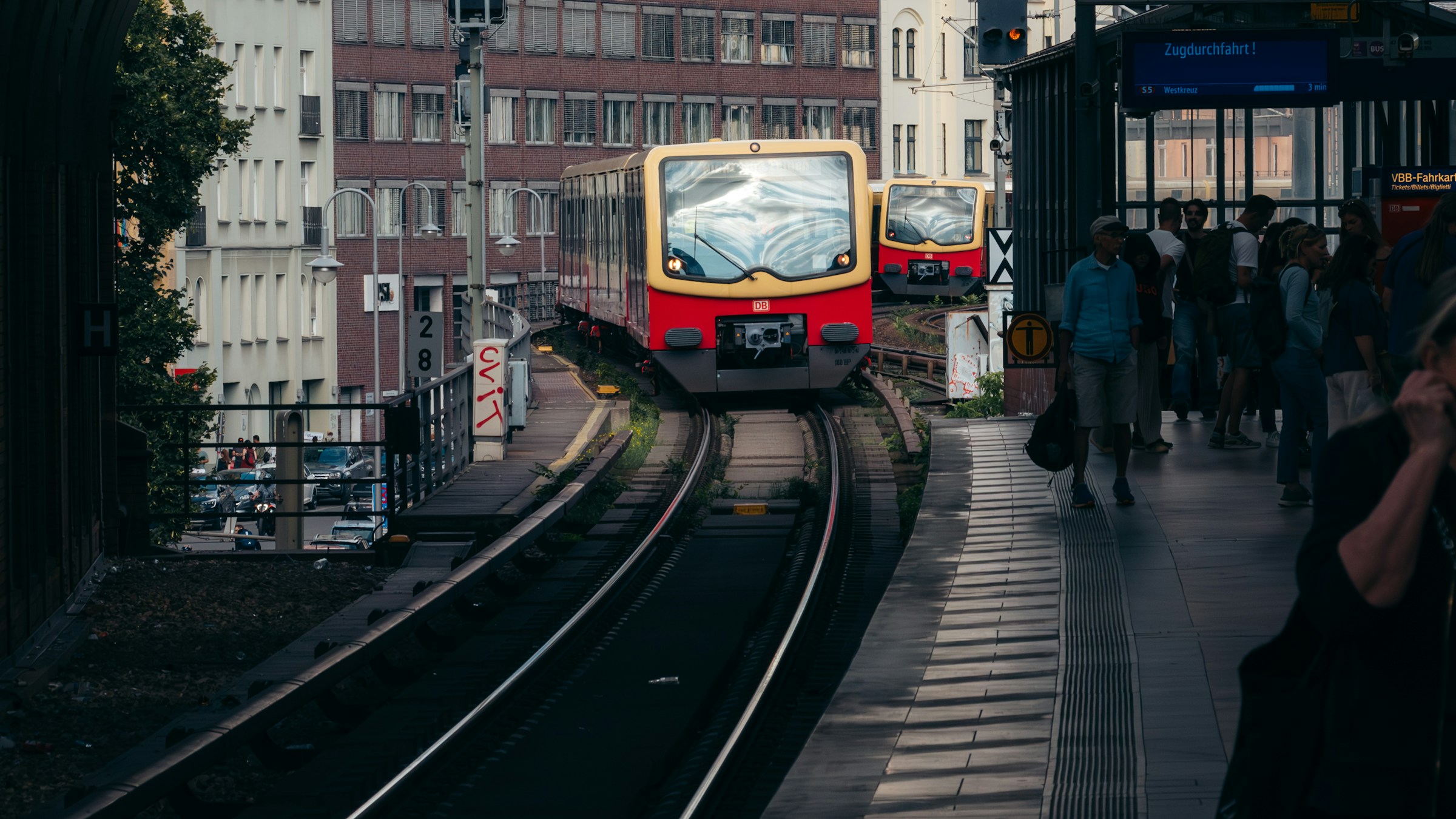
Modes of Transportation #
Major cities in Germany have four main types of public transportation. The fastest and most used is the rapid transit system, which includes five U-Bahn (subway) networks serving city centers and thirteen S-Bahn lines that run underground in central areas and above ground toward the suburbs. Public transport also includes Straßenbahn (trams) and buses.
Buses are a good option for traveling at night. They are cheaper than taxis and available even late at night, but they are usually slower and less comfortable. Trams, on the other hand, can carry more passengers and move faster because they have their own tracks, though they follow fixed routes and are less flexible.
U-Bahn (Subway/Underground)
Most major cities in Germany have the U-Bahn (Untergrundbahn), an underground rapid transit system. Trains run below ground in the city center and come to the surface as they move toward the outskirts. Lines are clearly organized and numbered with a “U” followed by a number. Trains run frequently every 5 to 15 minutes.
S-Bahn (Suburban Commuter Rail)
The S-Bahn connects city centers with suburbs and nearby towns. It runs both underground and above ground, offering smooth travel between central and outer areas. Major cities like Berlin, Hamburg, Munich, Frankfurt, Stuttgart, Cologne, and Dresden have extensive S-Bahn systems. Trains usually run every 20 to 30 minutes. On weekdays, services are more frequent than on Sundays and holidays.
Bus
Bus stops in Germany are marked with a green “H” sign. The larger the city, the more bus lines it has. For example, Berlin operates several bus systems, including a night service. Smaller towns often use buses connected to the GermanRail network.
Straßenbahn / Trambahn (Streetcar / Tram)
Many cities, especially in the east, have tram systems. In big cities, trams may go underground in crowded areas. They are reliable, run on fixed tracks, and are sometimes called the “tube.”
Stadtbahn (Light Rail)
The Stadtbahn, or light rail, is similar to the U-Bahn but mainly runs above ground and connects suburban areas. It operates on dedicated tracks, making it faster than trams, with trains running every 10 to 20 minutes. Stations use the same “U” sign as the U-Bahn, but with “Stadtbahn” written underneath, which can be confusing for newcomers.
Regional and National Public Transport in Germany Explained #
Germany’s transport system is divided into zones and regions, and ticket prices depend on the area you travel in.
For longer distances, regional trains (like RE or RB) connect nearby towns and cities.
Since 2023, Germany offers the Deutschlandticket (Germany Ticket) a monthly pass for €58 that allows unlimited travel on all regional and local public transport across the country (including buses, trams, S-Bahn, and U-Bahn). It can be bought digitally through the DB Navigator app or local transport apps.
How to buy and validate Public Transport tickets in Germany #
Tickets are available as single-use, daily, weekly, or monthly passes. A valid ticket allows travel on all types of public transport within the city, including S-Bahn, U-Bahn, buses, trams, and ferries.
Tickets can be purchased from machines at S-Bahn and U-Bahn stations, which are multilingual and easy to use. On buses, tickets are bought directly from the driver, while in trams, they can be purchased from machines inside the vehicle.
You can buy digital tickets through official apps like Deutsche Bahn (DB Navigator) or local transport apps such as BVG (Berlin), MVV (Munich), or HVV (Hamburg). Payment can be made with a card or mobile wallet, and the ticket is stored on your phone.
All tickets must be validated before travel. This is done by stamping them in the yellow or red validation boxes at the stations. On buses and trams, the driver or conductor validates them manually. If checked by inspectors, an unstamped ticket is considered invalid, and you can be fined around 40-60 euros.
Traveling with Dogs and Bicycles #
Traveling with a dog is allowed if it is leashed and wears a muzzle. Small dogs (about the size of a cat) can travel for free, while larger dogs usually need a ticket costing around €1.50.
You can also take bicycles on most S-Bahn and regional trains, but you often need a separate bike ticket. During rush hours, some restrictions may apply.
Accessibility and Convenience #
Most stations are equipped with elevators, ramps, and escalators for people with disabilities or strollers. Signs are usually in German and English, and announcements are often bilingual in major cities.
Night and Weekend Travel #
In large cities, night buses and night trains (Nachtlinien) operate after midnight, especially on Fridays and Saturdays. Most transport services run from around 4:30 a.m. to midnight on regular days.
Tickets for Children, Students, and Discounts #
Children under 6 years old travel for free, and those between 6 and 14 often pay half fare. Students, apprentices, and senior citizens can get discounted travel passes depending on the city or region.
Germany’s public transport is one of the most efficient in Europe. With a bit of preparation, downloading the right apps, understanding ticket rules, and validating your pass, you can travel comfortably and affordably across the entire country.
Leave your comment