
Germany Scraps Fast-Track Citizenship Route After Three Years: What it means for Foreign Residents #
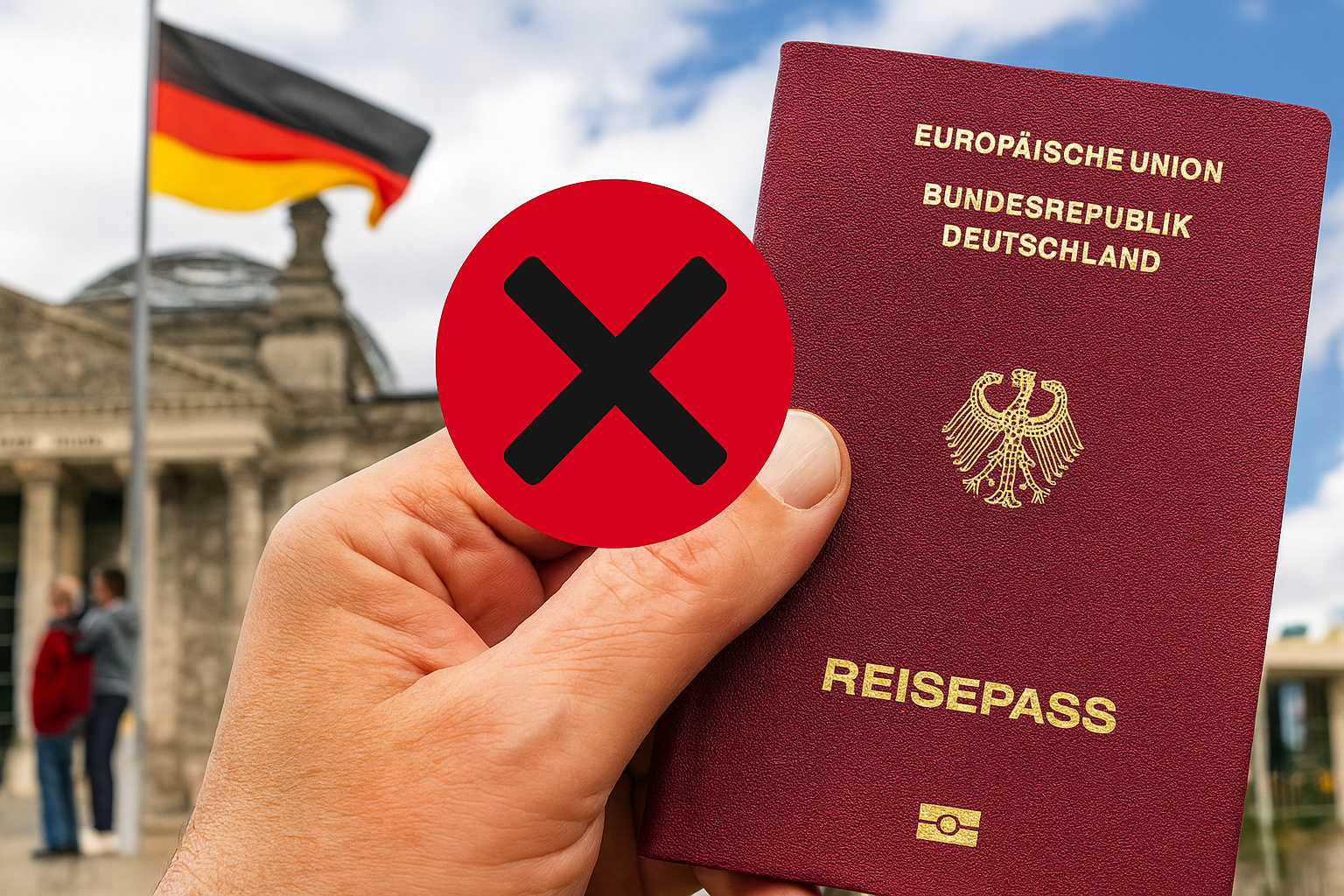
Germany has officially abolished the “fast-track” route to citizenship that allowed eligible foreign residents to apply for a German passport after just three years of living in the country. The change took effect on October 30, 2025, following a vote in the Bundestag (German parliament) earlier in the month.
This marks a significant policy shift under Germany’s new CDU/CSU–SPD coalition government, reversing a key part of the 2024 citizenship reform introduced by the previous SPD-Greens-FDP (traffic light) coalition.
The End of the 3-Year “Turbo” Citizenship Route #
When the fast-track naturalization scheme was introduced in June 2024, it was hailed as one of Europe’s most progressive citizenship policies. It allowed well-integrated residents to apply for German citizenship after only three years provided they could demonstrate:
- Exceptional integration achievements
- Strong German language proficiency (C1 level)
- Stable employment or notable academic or professional contributions
However, less than 18 months later, the new conservative-led government decided to repeal this route, arguing that citizenship should come after sustained integration, not accelerated timelines. From now on, the minimum residency requirement for most foreign nationals will return to five years the same as before the 2024 reforms.
What stays the same #
While the three-year path is gone, other key reforms from 2024 remain intact. Foreign residents can still benefit from:
- Naturalization after five years of legal residence (or three years in exceptional humanitarian cases approved separately).
- Dual citizenship, which remains allowed even for non-EU nationals.
- Simplified application procedures for long-term residents and families.
These aspects were kept during coalition negotiations between the CDU/CSU and SPD, representing a compromise between conservative and centrist approaches to migration.
Political Reactions and Debate #
The decision sparked mixed reactions across Germany’s political spectrum. Members of the CDU/CSU argued that the fast-track route risked diluting the value of citizenship, claiming that identification with Germany requires a longer integration period.
Some conservative lawmakers even called for stricter citizenship retention rules, including proposals to revoke German nationality from dual citizens convicted of serious crimes or anti-constitutional activity.
However, critics and opposition parties such as the Greens, FDP, and Die Linke have condemned the move, arguing that it sends the wrong message to skilled migrants and international professionals who contribute significantly to the German economy.
Why the Law was changed #
The CDU/CSU-led government emphasized three main reasons for repealing the 3-year rule:
- Low practical impact: Only a few hundred people successfully qualified under the fast-track system since its launch.
- Consistency and fairness: Most immigrants already follow the 5-year pathway; officials said the fast-track option created unnecessary inequality.
- Integration philosophy: The new administration believes citizenship should mark the culmination of integration, not an incentive to begin it.
What it means for Foreign Residents #
If you are currently living in Germany and planning to apply for citizenship, here’s what you need to know:
- The 3-year route is no longer available as of October 30, 2025.
- You may still apply under the 5-year rule, as long as you meet language, income, and integration criteria.
- Applications submitted before October 30, 2025 may still be processed under the old system, depending on local authorities’ interpretations.
- You can retain your original citizenship if your country allows it, thanks to Germany’s continued acceptance of dual nationality.
A Symbolic but Significant Shift #
Experts note that while the change affects relatively few people, it sends a clear political signal. The new government aims to balance openness with stricter integration expectations, positioning Germany as both welcoming and selective in its approach to citizenship.
The repeal also reflects broader European trends, where debates about identity, migration, and belonging continue to shape policy.
Final Thoughts #
Germany’s decision to end the 3-year citizenship path marks the end of one of Europe’s boldest immigration experiments. For international residents, the message is clear: citizenship remains attainable, but through long-term commitment to life in Germany. As one chapter of reform closes, another opens and the conversation about what it means to become “truly German” is far from over.
Check out our detailed guide on how to apply for German citizenship.
Leave your comment