
How to get health insurance in Germany #
In Germany, health insurance is mandatory for everyone whether you are a student, employee, freelancer, or expat. You cannot register at university, sign an employment contract, or even get a residence permit without showing proof of health insurance.
Types of Health Insurance in Germany #
When choosing health insurance, the right option depends on your status and income.
1. Public Health Insurance (Gesetzliche Krankenversicherung – GKV) #
Best suited for:
- Employees earning under the income threshold
- University students
- Interns and apprentices
Popular public providers:
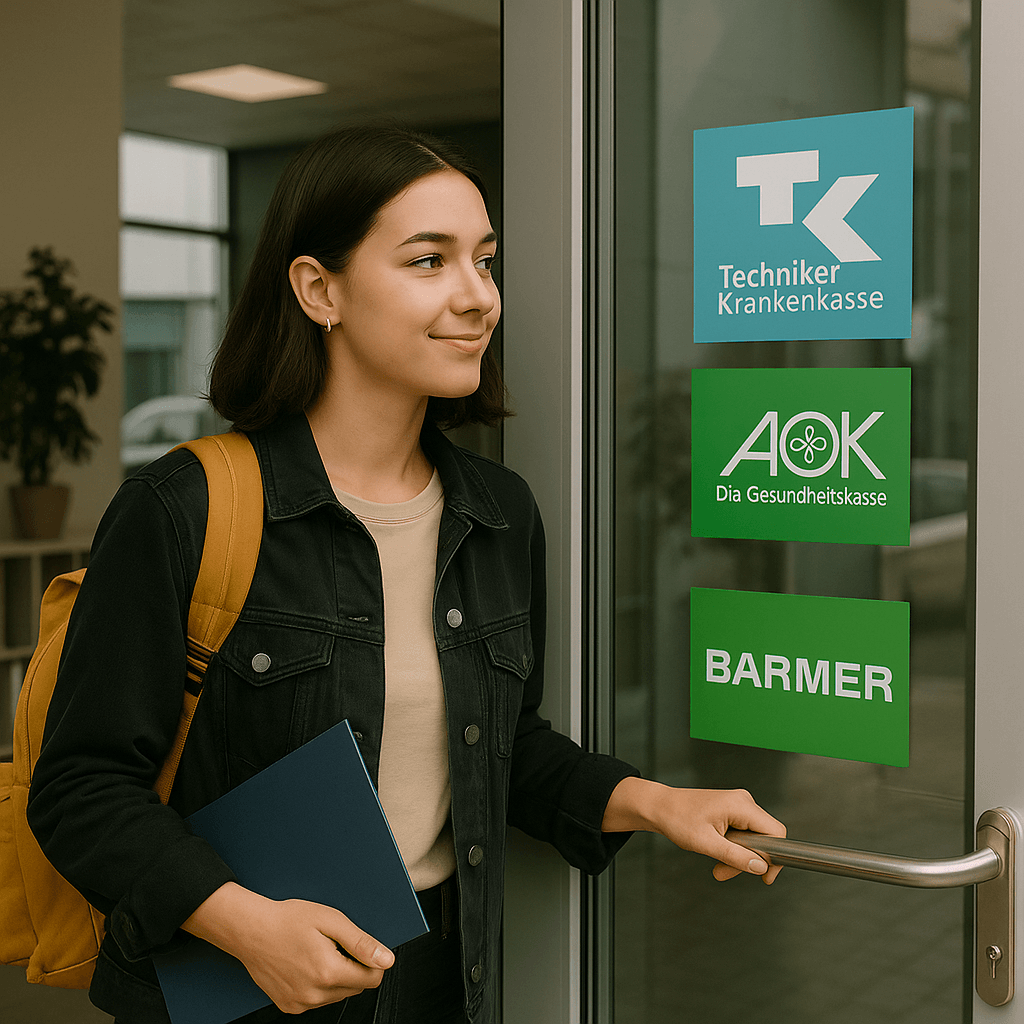
- TK (Techniker Krankenkasse)
- AOK
- Barmer
2. Private Health Insurance (Private Krankenversicherung – PKV) #
Best suited for:
- Freelancers & self-employed professionals
- High earners above the public threshold
- Expats wanting tailored coverage
Popular private providers:
- Ottonova (digital-first, English-friendly)
- Allianz
- Debeka
Documents you will need to get health insurance #
- Passport/ID
- Proof of residence in Germany (Anmeldung)
- Employment contract OR university admission letter
- Bank details (for monthly premium payments)
Frequently Asked Questions (FAQ) about Health Insurance in Germany #
1. I am over 30 years old and a student. Can I still get public student health insurance?
No. Student health insurance (around €120/month) only applies until age 30 or until the 14th semester. After that, you must switch to regular public insurance (more expensive) or choose private insurance.
2. I am a freelancer/self-employed. Do I have to take private insurance?
Not always. Freelancers can apply for public health insurance, but acceptance is not guaranteed. Many choose private insurance, which may start cheaper but usually becomes more expensive as you age.
3. Can I switch between public and private health insurance?
Switching from public to private is easy. Returning from private to public is very difficult and only possible under certain conditions (e.g., income drops below the threshold, unemployment).
4. Which option is better for expats who don’t know how long they’ll stay?
Public insurance is safer for long-term stays. Private insurance can be cheaper in the short term, especially for young and healthy expats.
5. How much does health insurance cost in Germany?
- Public (GKV): about 14–16% of gross income (employer pays half if employed). Students get a reduced flat rate.
- Private (PKV): based on age, health, and coverage. Starts cheaper but can rise significantly over time.
Leave your comment